How do game machines work?
By jiaxin
January 5th, 2026
393 views
How Game Machines Work: A Technological Journey from Coin Insertion to Immersive ExperiencesWhen a coin slides into a game machine, the lights come on, the screen flashes, and a virtual world instantly activates—behind this seemingly simple process lies a complex and sophisticated technological system. Understanding how game machines work is not only a technological exploration but also a window into how modern entertainment technology creates magic.The Four-Layer Architecture of Game MachinesLayer 1: Input System—The Player's "Tentacles"The input system of a game machine is the bridge connecting reality and virtuality:Diverse Control Devices:Traditional Arcades: Joysticks, Buttons, TrackballsRacing Simulators: Steering Wheels, Pedals, Gear ShiftersShooting Games: Light Guns, Motion ControllersTouchscreen Devices: Multi-touch TechnologyThese input devices convert the player's physical actions into electronic signals. These signals are transmitted to the main processing unit through an interface, with latency typically controlled at the millisecond level to ensure real-time response.
Layer 2: Processing Core – The “Brain” of the Game
The core of a modern game console is a highly customized computing system:
Hardware Components:
Main Processor: Responsible for game logic and physics calculations
Graphics Processing Unit (GPU): Renders 3D scenes and effects
Audio Processing Unit (APM): Generates surround sound and audio effects
Dedicated Chip: Used for special effects (such as vibration and lighting control)
Software Architecture:
Game Engine: Physics simulation, collision detection, AI behavior
Operating System: Resource management and hardware scheduling
Content Data: Level design, character models, audio and video resources
Layer 3: Output Systems – Senses as an Extension
Game consoles create immersive experiences through a variety of output devices:
Visual Output:
High-definition displays (LCD/LED/OLED)
Projection systems (for large cockpits)
Multi-screen setups (panoramic view)
Audio Output:
Multi-channel surround sound
Proximal sound technology (sound spatial positioning)
Subwoofer systems (enhanced vibration sensation)
Physical Feedback:
Force feedback devices (steering wheel resistance, weapon recoil)
Dynamic platforms (simulating motion acceleration)
Environmental effects (wind, fog, vibrating floor)
Layer 4: Support System – Continuous “Vitality”
Power Management:
Stable Voltage Supply
Peak Power Handling
Energy Saving Mode
Cooling System:
Air Cooling/Liquid Cooling Design
Intelligent Temperature Control
Long-Term Operational Stability
Business Functions:
Coin-operated/Payment System
Data Statistics and Remote Monitoring
Maintenance and Diagnostic Interface
Jiaxin's Technological Implementation: From Principles to Superior Experience
In Jiaxin's game console design, these principles are not only applied but also redefined and optimized:
Vertical Integration Advantages of Own Factory
Jiaxin's own factory allows for deep optimization at the hardware level:
Customized Hardware Design:
The force feedback system of the racing game console uses patented hydraulic technology, providing more realistic resistance gradients.
The optical aiming system of the shooting game console has a latency 30% lower than the industry standard.
The control interface of the children's gift machine is ergonomically optimized for hand sizes of different age groups.
Durability Engineering:
Game consoles in commercial environments face high-intensity use. Jiaxin's equipment employs:
Industrial-grade connectors with a lifespan exceeding 50,000 plug-in/plug-out cycles.
Protective coated circuit boards to resist humidity and dust.
Modular design for quick replacement of key components.
Deep Content from Independent R&D
Jiaxin's nearly 60 independently developed game consoles are not simply reskinned products, but rather feature:
Proprietary Physics Engine:
Racing Simulator: Vehicle dynamics models are based on realistic physical parameters.
Shooting Games: Ballistic calculations take into account virtual environmental factors (wind speed, gravity).
Gift Machines: Probabilistic algorithms ensure both fun and commercial viability.
Multi-Level Difficulty System:
Dynamic adjustment mechanism ensures a challenge for both beginners and experienced players.
Hidden skill combinations increase the exploration space for hardcore players.
Learning AI opponents prevent boredom from repetitive modes.
Annual Technological Evolution
Behind Jiaxin's promise of "new model releases every year" lies continuous technological advancement:
Incremental Innovation:
Display Technology Iteration: From 1080p to 4K, and then to high refresh rate screens
Feedback System Upgrades: From simple vibration to a multi-axis dynamic platform
Interaction Method Expansion: From physical control to augmented reality overlay
Compatibility Design:
New models often support content updates for older versions
Control interfaces maintain backward compatibility
Unified platform for operation and maintenance systems reduces site management costs
The "Working Philosophy" of Game Consoles: Creating Experiences, Not Just Running Programs
Beyond the technical level, Jiaxin adheres to a "working philosophy": game consoles should create complete experiences, not merely execute code.
This philosophy is reflected in:
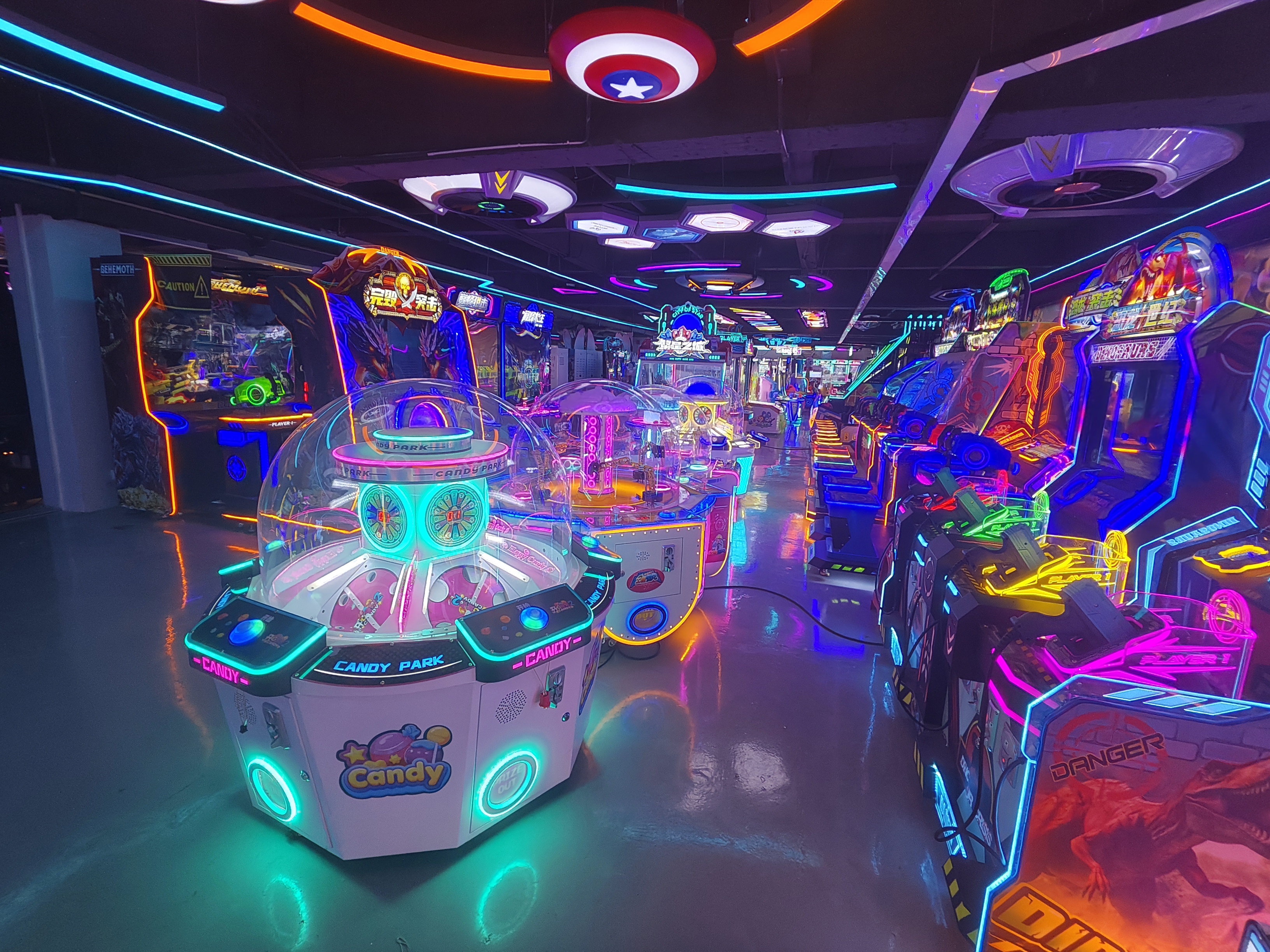
Environmental Integration Design: The shape, lighting, and sound of the game console become part of the entertainment space, attracting both players and onlookers.
Building Social Interaction: Whether it's the leaderboard competition in racing games, the teamwork in shooting games, or the reward sharing in prize machines, each device is designed with social elements.
Creating Emotional Memories: Through controlled difficulty curves, timely reward moments, and the inclusion of surprise elements, Jiaxin ensures that players leave with positive emotional memories.
The Future of Work: Intelligent and Personalized
The working principles of game consoles are still evolving, and Jiaxin is exploring:
Artificial Intelligence Integration:
Player style recognition, automatically adjusting game parameters
Predictive maintenance, providing early warnings before malfunctions occur
Content recommendation, recommending game modes based on time of day and user groups
Cross-Device Interconnection:
Multiple game consoles working together to create a larger-scale gaming experience
Mobile application expansion, continuous interaction before and after gameplay
Cloud data synchronization, allowing player progress to continue across venues
Conclusion: When Technology Meets Fun
Game consoles work through the collaborative efforts of a series of sophisticated technological components, but the real magic happens when the technology becomes transparent—when players are completely immersed in the experience, forgetting the existence of buttons and screens, feeling only the speed of racing, the tension of shooting, or the joy of winning a prize.
From the moment the first coin enters the slot to the player leaving with a smile, the game console completes a full "work cycle." Jiaxin's goal is to ensure that each such cycle is as perfect as possible: through quality control in its own factories, independently developed creativity, and continuously updated technology, making the machines not just work, but create joy.
This is perhaps the most profound working principle of game consoles: they are not merely a collection of electronic devices, but converters that transform technology into human experiences. Every successful conversion is a tribute to the essence of entertainment.
Previous
Navigating Options for Arcade Horse Racing Games in Indoor Playgrounds
Read More
Next
What is the best Simulator racing game?
Read More


